An unplanned DOT roadside inspection can shut down a truck for hours or days over issues that, in most cases, are cheap and quick to prevent. Understanding what inspectors actually look at is the difference between a clean inspection sticker and an out-of-service order that strands your load.
The inspection levels you'll actually encounter
Most roadside stops fall into one of three levels. A Level I inspection is the most thorough, covering both the driver's paperwork and a full walk-around of the vehicle and any trailer. A Level II is similar but skips components that would require the inspector to get underneath the vehicle. A Level III is a driver-only check of license, medical card, hours of service, and other documentation. Knowing which level you're in helps you understand what's actually being scrutinized in the moment.
Brakes: the single biggest cause of out-of-service orders
Brake violations are the number one reason trucks and trailers get placed out of service nationally, and Georgia is no exception. Inspectors check for adequate lining thickness, look for air leaks in the brake chambers, and verify that the brakes actually apply and release evenly across all axles. A single out-of-adjustment brake, or one that doesn't release properly, is enough to fail. Regular brake inspections between DOT stops catch this before an inspector does.
Lights, reflectors, and electrical
This is the most common category of minor violations, and often the most avoidable. Inspectors check every marker light, brake light, turn signal, and reflective tape strip on both the truck and trailer. A single burned-out bulb can result in a citation, even when everything else is fine. A five-minute walk-around before every trip, checking every light with the engine running, catches nearly all of these before they become a problem on the road.
Tires
Inspectors measure tread depth and look for any sign of tread separation, exposed cords, or under-inflation. The standard minimum is 4/32 of an inch on steer tires and 2/32 on all others, but any visible damage, such as a bulge, a cut that exposes cord, or uneven wear from an alignment issue, can trigger an out-of-service order even if the tread technically passes.
Airlines, brake hoses, and connections
For trailers specifically, inspectors pay close attention to the airline connections between the tractor and trailer. Chafed hoses, loose glad hand connections, and improperly secured lines are common findings. These are also some of the fastest and cheapest things to fix before they turn into a roadside failure. A chafed airline that finally lets go on the highway is a far bigger problem than one caught in a pre-trip inspection.
Coupling and suspension
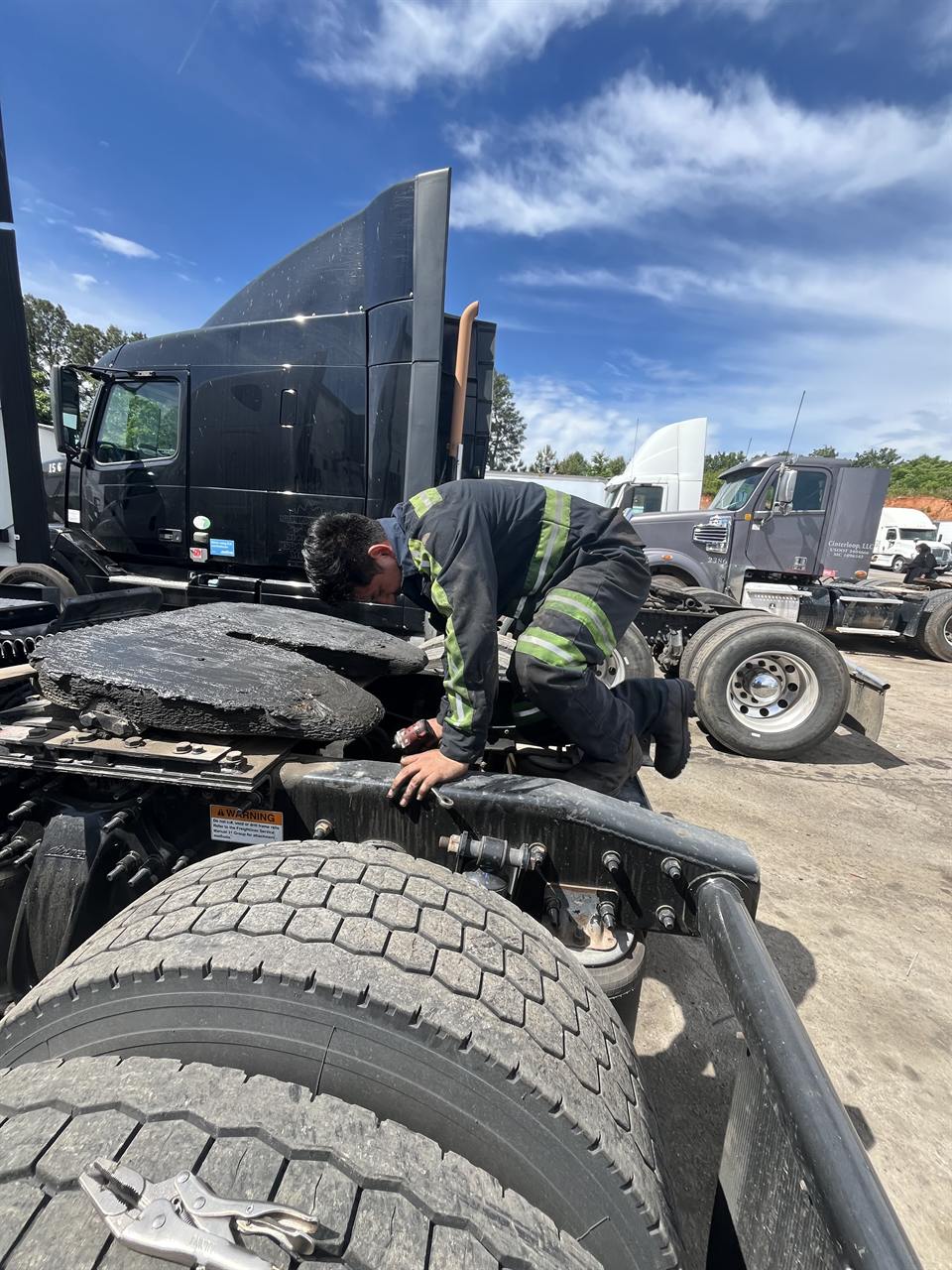
The fifth wheel connection, kingpin, and trailer suspension components all get checked for wear, cracks, and proper function. A worn kingpin or a fifth wheel that isn't locking properly is treated as a serious safety issue, and for good reason. It's one of the few defects that can cause a catastrophic failure rather than just a fine.
What a pre-trip inspection should actually cover
A thorough pre-trip walk-around, done consistently, catches the overwhelming majority of what a DOT inspector checks. That means testing every light, checking tire tread and pressure, listening for air leaks with the brakes applied, inspecting airlines for chafing, and confirming the coupling is secure. Five to ten minutes before each trip is a small investment against hours of downtime on the shoulder.
When something does turn up
If a pre-trip inspection turns up a problem, or an inspector flags something during a stop, the value of a mobile repair service is getting it fixed at the yard, the dock, or the roadside instead of waiting for a tow to a shop. Brake adjustments, light repairs, airline replacements, and most coupling issues can be handled on-site, often getting a truck back in service the same day instead of losing a full day to a shop queue.
Need a pre-trip inspection, a fix before your next run, or roadside help right now? Call (678) 372-2667. We come to trucks and trailers anywhere in the metro Atlanta area, every day.